 Think
Think Children of Asgard
Ten gods forged in frost and fire, bound by fate and the promise of Ragnarok. The Norse pantheon is Pantheon Frontlines' summon-focused faction — a force of nature, deception, and inevitable destruction.
Norse Faction Identity — Ramping Threat
Fenrir represents the Norse faction's escalation archetype. He starts contained — and ends the fight as the most dangerous force on the field. The longer he fights, the worse the situation becomes for whoever is standing across from him.
Fenrir
The great wolf who will devour the sun. Fenrir doesn't start battles at full power — he builds toward something far worse. Every strike feeds his rage, every chain he breaks releases something uglier, until at maximum stacks his next hit is guaranteed to crit. He is not the biggest threat at the start of the fight. He is the biggest threat by the end of it — and the gap between those two points is very short.
A vicious, tearing strike — fast, hungry, and already stacking toward something the enemy cannot survive indefinitely.
Fenrir throws his head back and howls — surging with aggression and pressing the psychological weight of what he's becoming onto the entire enemy formation.
A thunderous gap-closing leap that carries Fenrir across the battlefield before anyone can reposition — heavy impact, immediate threat, zero hesitation.
The prophecy fulfilled. Fenrir's jaws close around the light itself — a massive execute-style strike that hits harder than anything else in his kit, powered by everything he's built up to reach this moment.
Boundless Rage
Each attack grants stacking ATK. At maximum stacks, Fenrir's next strike is guaranteed to critically hit. The chain was always going to break. The only question was how many times he hit you before it did.
Norse Faction Identity — Summon Mechanics
Freya introduces the Norse faction's defining mechanic: persistent battlefield summons. Her banner is a physical object placed on the field — providing ongoing effects and tempo advantages that stack over time. Coordinate around it, and the Norse team becomes exponentially harder to stop.
Freya
Goddess of love, war, and the unstoppable power of life. Freya does not heal passively — she fuels. Every ally she restores becomes a sharper weapon, a faster unit, a force the enemy did not account for. She is the reason Norse teams push when lesser formations would break. Her banner does not just inspire — it transforms the tempo of the entire encounter.
A divine arrow imbued with restorative energy — dealing damage while blessing a nearby ally with healing as the shot flies true. Offense and support, delivered simultaneously.
Freya channels the power of Fólkvangr — healing allies and drawing the wounded back toward fighting strength with steady, reliable restoration.
Freya designates an ally as chosen — granting them enhanced ATK and SPD as the Valkyries' favor settles around them like armor forged from divine will.
Freya plants her divine banner on the battlefield — a persistent object that provides team-wide buffs, accelerates tempo, and turns the tide of extended encounters for as long as it stands.
Goddess of Renewal
Whenever Freya heals an ally, that ally gains bonus ATK. Healing is not just survival in her hands — it is preparation. Every restoration is also an escalation.
Heimdall
Guardian of the Bifrost, watchman of the Nine Realms, keeper of Gjallarhorn. Heimdall sees everything — across all realms, at all times, without rest. On the battlefield, that all-seeing awareness translates into an immovable defensive presence. He doesn't just hold the line; he announces when it's about to be broken. His horn disrupts enemy advances, his shield of rainbow light absorbs punishment for those behind him, and nothing crosses the Bifrost he is guarding without going through him first.

A precise strike channeling the energy of the rainbow bridge — reliable, controlled, carrying the authority of the realm's first and last defender.

Heimdall raises Gjallarhorn — a resonating blast that disrupts enemy formations, interrupts abilities, and sends a clear message that the advance stops here.

Heimdall projects the radiant barrier of the Bifrost itself — absorbing incoming damage for himself and adjacent allies with a shield forged from the light between worlds.
The guardian tears open the Bifrost in a catastrophic burst — a wide-range eruption of rainbow energy that stuns enemies, strips their defenses, and leaves the field scorched with the light of nine realms unleashed at once.
All-Seeing Watch
Heimdall's perfect awareness grants him and adjacent allies a first-strike advantage — his defensive reactions trigger slightly ahead of incoming attacks, reducing the first hit of any enemy assault. He doesn't dodge the blow. He simply knew it was coming.
Jörmungandr
The Midgard Serpent. A creature so vast it encircles the entire world with its body. Jörmungandr does not win through speed or precision — it wins through inevitability. Poison spreads. The coils tighten. AoE pressure radiates from every strike until the entire field is compromised, and enemies begin to understand that there was never a safe position from the start.
A crashing strike from below — dealing damage with the momentum of ocean depths, and leaving a trace of venom in every wound that refuses to close.
Jörmungandr brings a crushing wave across enemy lines — AoE damage that doesn't discriminate, doesn't miss, and covers ground that no one had time to evacuate.
The coils close. Control effects restrain enemies in place while poison continues to spread from every point of contact — escape is not an option the serpent offers.
The World Serpent unleashes the ocean itself. A massive AoE wave crashes through the formation with the weight of a world-ending event — there is no outrunning the tide.
World Serpent Venom
Jörmungandr's attacks apply poison that compounds over time. The longer a battle lasts, the more of the battlefield belongs to the serpent. There is no clean endgame when Jörmungandr is in the fight.
Norse Faction Identity — Illusion & Decoy Summons
Loki introduces the second summon type in the Norse faction: illusions and decoys. Unlike Freya's banner (a buff source), Loki's summons are misdirection tools — absorbing attacks, redirecting targeting, and creating confusion that the enemy must spend resources to resolve.
Loki
The trickster god. The shapeshifter. The most dangerous mind on the battlefield. Loki does not fight fair — he fights by making fair an irrelevant concept. Illusions redirect attacks, decoys absorb damage, and by the time the enemy understands what is real and what isn't, Loki has already decided how the encounter ends. He is not the strongest unit. He is the one who makes strength not matter.
A strike that is never quite where it appears — disorienting, precise, and followed by something the enemy didn't see coming. Even the basic attack lies.
Loki creates a convincing illusion that misdirects enemy targeting — forcing attention toward a decoy while the real threat repositions freely behind the confusion.
Not physical chains — conceptual ones. Binding enemies through deception and control effects they cannot counter with raw force, because raw force was never the right answer.
The trickster's masterstroke. The arena floods with illusions, cascading control effects, and compounding confusion. By the time it clears, the fight has already been decided — just not how the enemy planned.
Trickster's Guile
Loki's deception mechanics compound — conditional effects trigger more reliably, and the longer a target remains deceived, the harder they fall. The trick is not in the first lie. It's in every lie that follows.
Odin
The Allfather. God of wisdom, war, death, and the ruinous knowledge of what is coming. Odin traded his eye for understanding and hung on Yggdrasil for nine days to grasp the runes — sacrificing comfort for power at every turn. On the battlefield, that sacrifice translates into supreme command authority: ravens carrying intelligence across the field, prophetic foresight stripping enemy advantages, and a spear throw from the Allfather that ends discussions before they begin. He does not fight because he must. He fights because he has already seen how it ends.

Odin hurls Gungnir with absolute precision — the spear that never misses, striking true regardless of position, range, or evasion. The throw of a god who has already calculated the outcome.
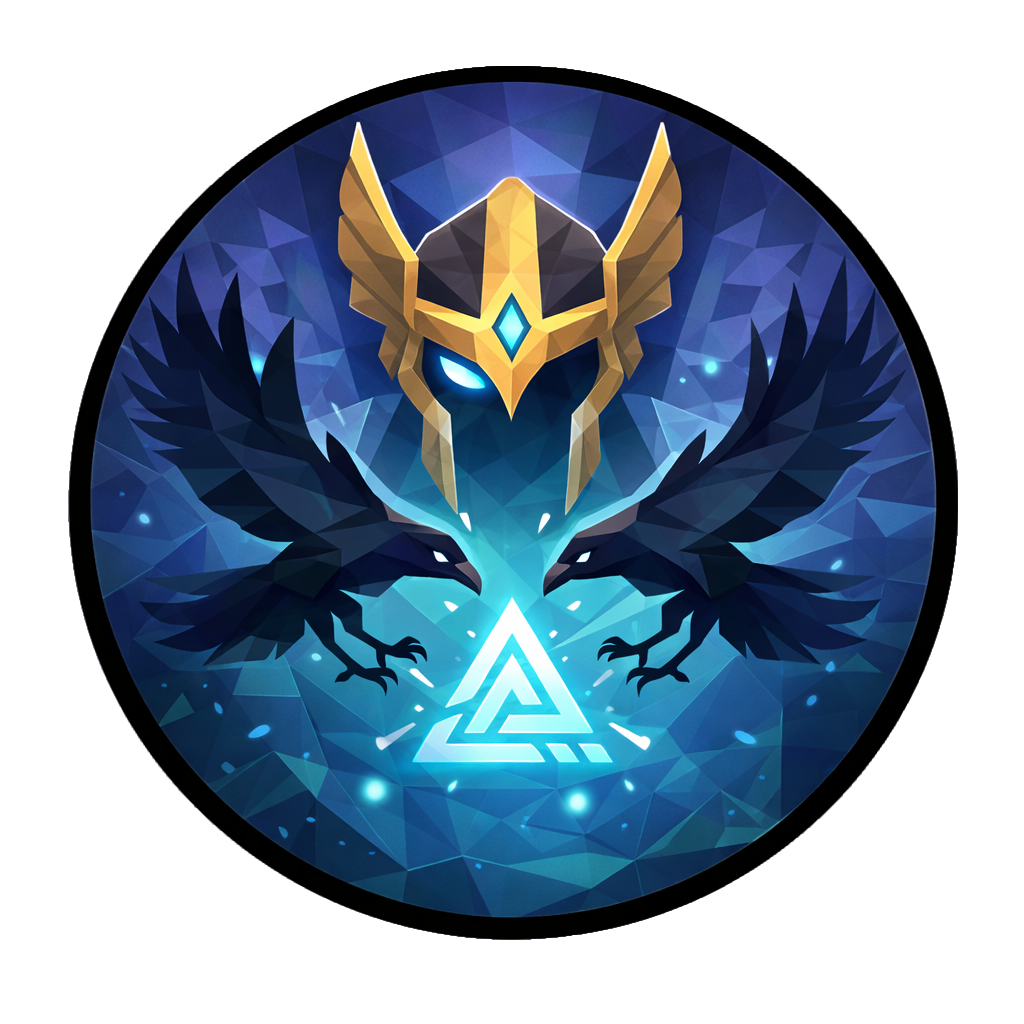
Huginn and Muninn take flight — spreading Thought and Memory across the battlefield. Enemies are marked; their abilities are revealed; and the intelligence advantage shifts entirely to Odin's side.

Odin channels the sacrificed eye's sight — perceiving the battlefield beyond normal limits, stripping enemy buffs, and applying a debuff that makes the target's next ability fail or misfire. Knowledge weaponized.
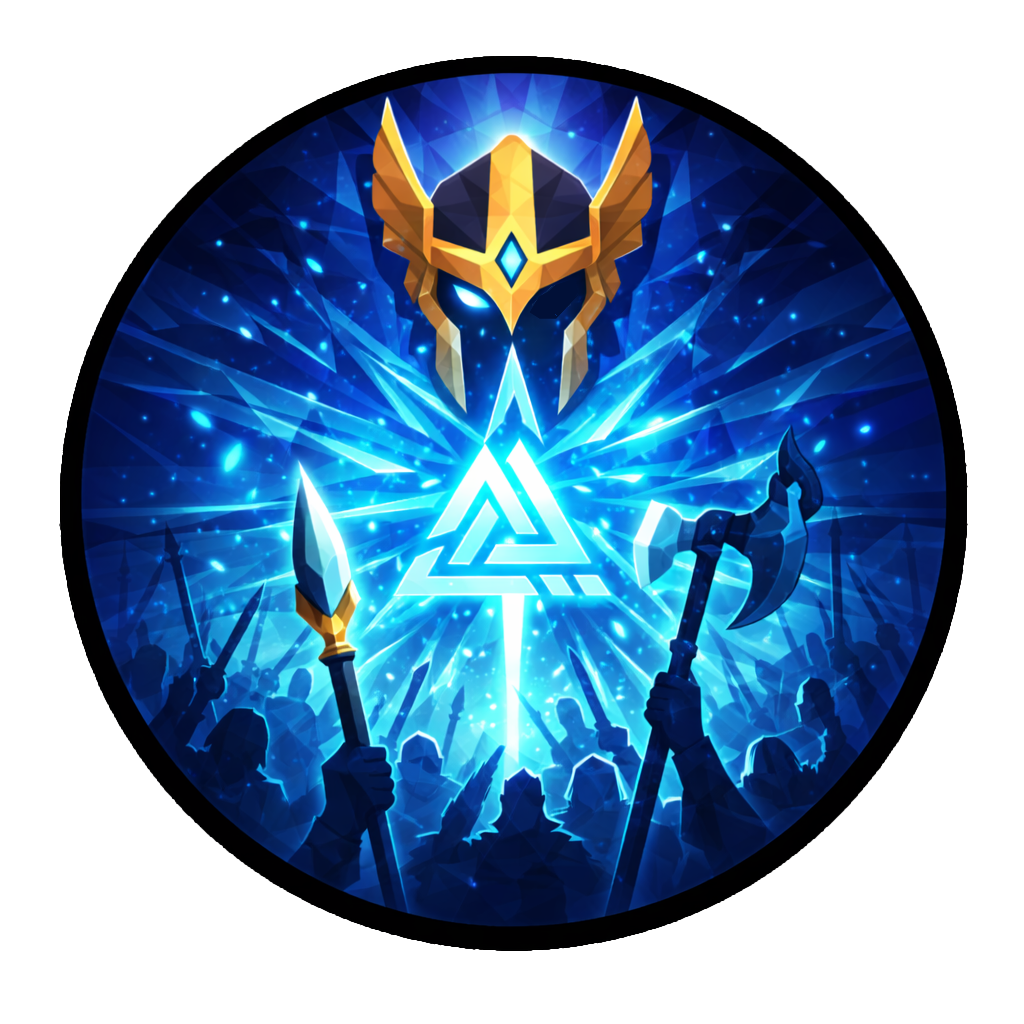
Odin speaks, and the battlefield obeys. A sweeping command ability that simultaneously buffs all Norse allies, disrupts the entire enemy formation, and reshapes the tempo of the fight in one decisive moment of divine authority.
Runic Foresight
Odin reduces incoming damage from enemies whose abilities he has already seen. The more the enemy has revealed, the less damage Odin takes from them. Familiarity is not a weakness for the Allfather — it is an armor.
Skadi
Goddess of winter, hunter of the frozen north. Skadi does not chase her prey — she slows them until they cannot flee, traps them until they cannot act, and finishes them with arrows from a distance they cannot close. She is the coldest form of battlefield control: patient, deliberate, and absolutely certain the target will not reach her before she is done.

A precisely aimed arrow that bites with winter cold — dealing damage and applying a slow that compounds with each subsequent hit. The cold builds. So does the disadvantage.

Skadi sets a frozen trap that immobilizes or heavily restricts an enemy's movement — the ground itself becomes a weapon, and the battlefield shrinks for whoever triggered it.

The mountain comes down. A massive wave of ice and force crashes across the battlefield — heavy damage and large-scale control effects that bury enemy formations under the weight of the north.
Iceborn Huntress
Slowed enemies take increased damage from Skadi. The slower they move, the cleaner the shot. She doesn't need to rush — she needs the target to stop. After that, the rest is simple.
Sif
Goddess of the golden harvest, wife of Thor, keeper of sacred fields. Sif sustains where others crumble — providing steady defense, consistent healing, and the kind of quiet endurance that lets more aggressive allies do exactly what they were built to do. She doesn't win fights through force. She wins by making sure her team is still standing when the force pays off.
A measured strike drawing on the strength of sacred earth — dealing damage while activating minor sustain effects for nearby allies as a quiet act of care amid combat.
Sif calls upon the abundance of the harvest — healing allies and providing regeneration effects that compound over time, rewarding teams that endure rather than burst.
Sif grants an ally a shield forged from the earth itself — strong defensive buffering that absorbs incoming punishment and buys the space to keep fighting.
The full blessing of the sacred harvest descends — a powerful team-wide sustain ability that heals, regenerates, and reinforces the entire formation when the fight hangs in the balance.
Golden Harvest
Sif's healing and sustain effects improve the longer a fight runs. The longer the battle, the more her presence compounds — a quiet, growing advantage that rewards teams patient enough to let her work.
Thor
The god of thunder. The mightiest warrior of Asgard. Thor doesn't need subtlety — he needs a target, enough sky to build momentum, and a single moment of opening. A burst damage dealer who chains through critical hits, each strike unlocking the next in a cascade of lightning and hammer-force that most enemy formations cannot survive intact. He is direct, he is devastating, and Mjölnir always comes back.
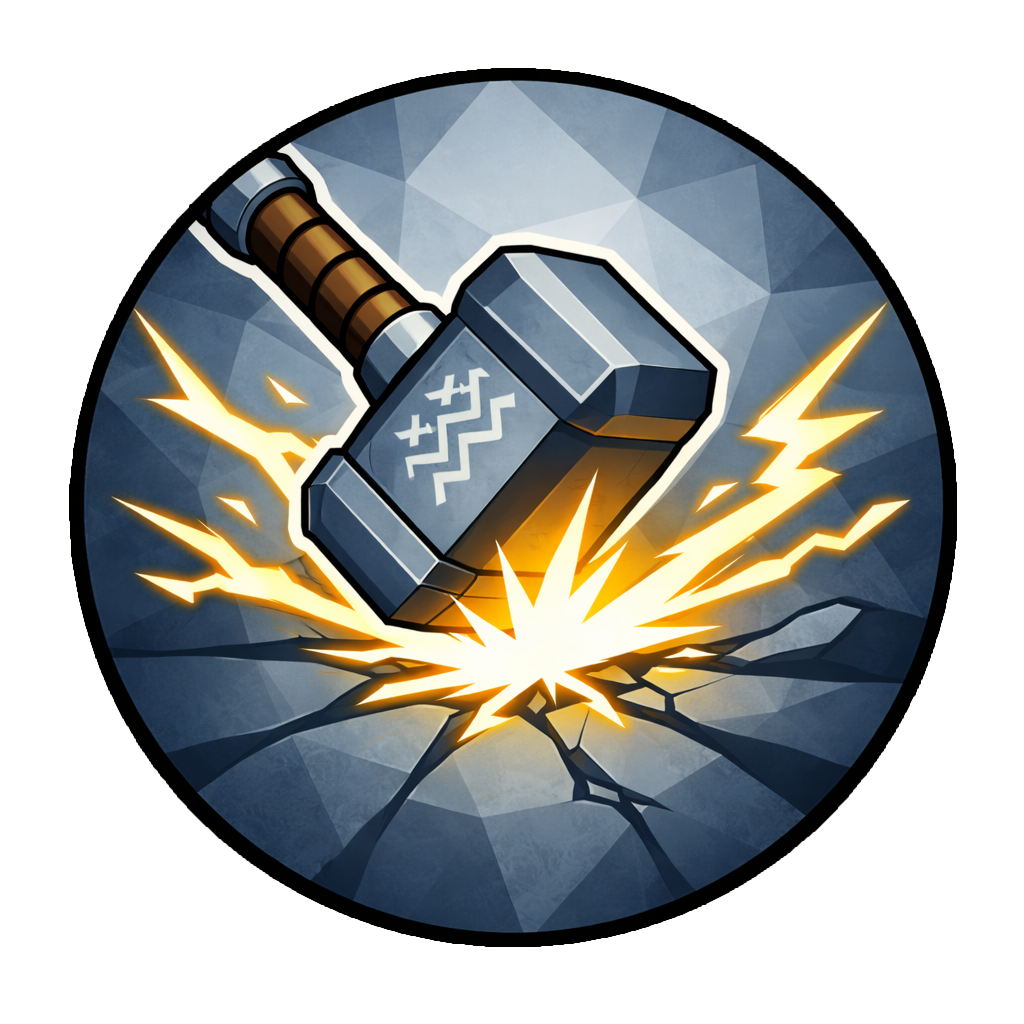
Thor's hammer finds its mark with the precision of divine purpose — a single, brutal strike that hits hard and sets up the chain that follows.
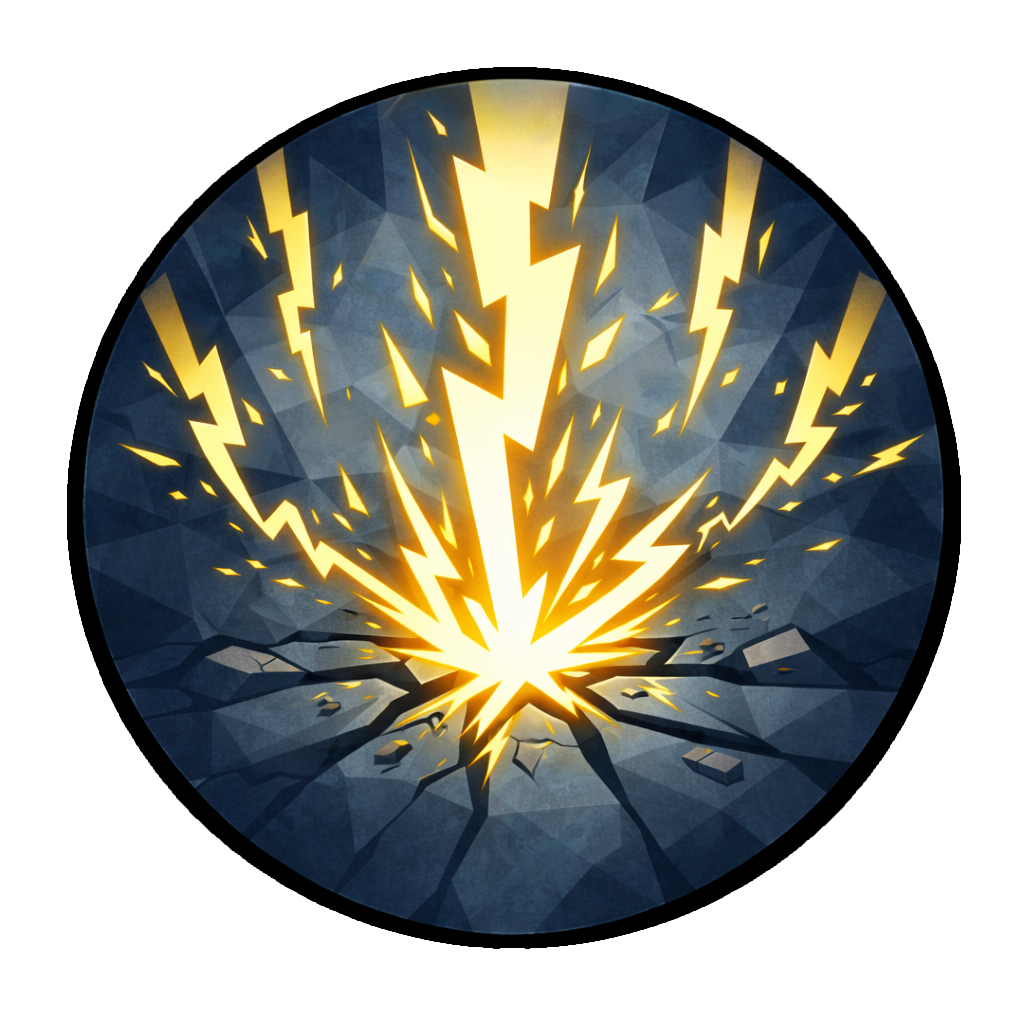
Thor calls the storm directly — AoE lightning radiates from his position, catching everyone in range in the same catastrophic moment of atmospheric judgment.

Mjölnir is thrown, strikes, and returns — hitting multiple targets in one devastating arc that punishes any formation dense enough to cluster together.
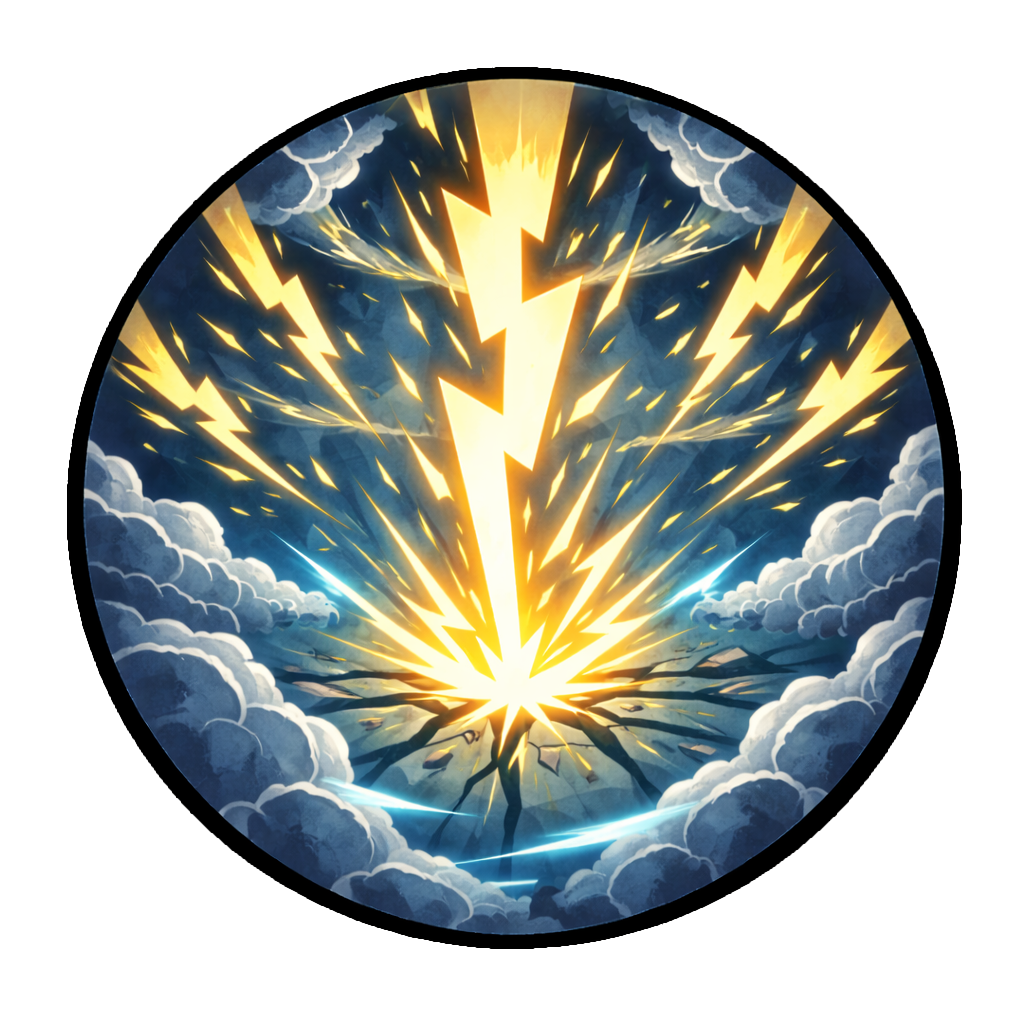
Thor channels the full fury of the sky into one apocalyptic burst — a high-damage AoE strike that arrives with the same subtlety as a thunderstorm and leaves the same way it came: with everything changed.
Thunderheart
Critical hits don't just deal damage — they trigger cooldown reductions and chain bonus effects. The more crits Thor lands, the more Mjölnir flies. He is not a burst unit with a cooldown. He is a burst unit with momentum.
Tyr
God of law, sacrifice, and the courage it takes to look into the abyss and hold the line anyway. Tyr paid with his hand to bind Fenrir and keep order in the world. He brings that same unflinching resolve to the battlefield — not the most powerful force on the field, but the most immovable. A frontline defender whose conviction has no ceiling and whose endurance outlasts whatever is thrown at him.
Tyr strikes with controlled fire — dealing damage scaled by his defensive mass. A reminder that the wall can still hit back, and it hits harder than expected.
Tyr invokes his sacred oath — granting strong defensive buffs through the sheer weight of divine commitment. The vow does not bend. Neither does he.
A shield wreathed in controlled fire that absorbs incoming damage and reflects a portion back — punishment for enemies who choose to attack the wall rather than go around it.
Tyr extends his protection across the entire formation — a powerful team-wide defensive cooldown that turns the next wave of incoming damage into something the team can endure and recover from.
Warrior's Resolve
Tyr becomes harder to eliminate the more pressure he absorbs. His survivability scales under sustained attack — the more the enemy commits to bringing him down, the worse of a decision that becomes. Some walls cannot be broken. They can only be endured.